
Oct 7, 2026
What Is Rhamnolipid? The Biosurfactant Explained for Agriculture
Related products
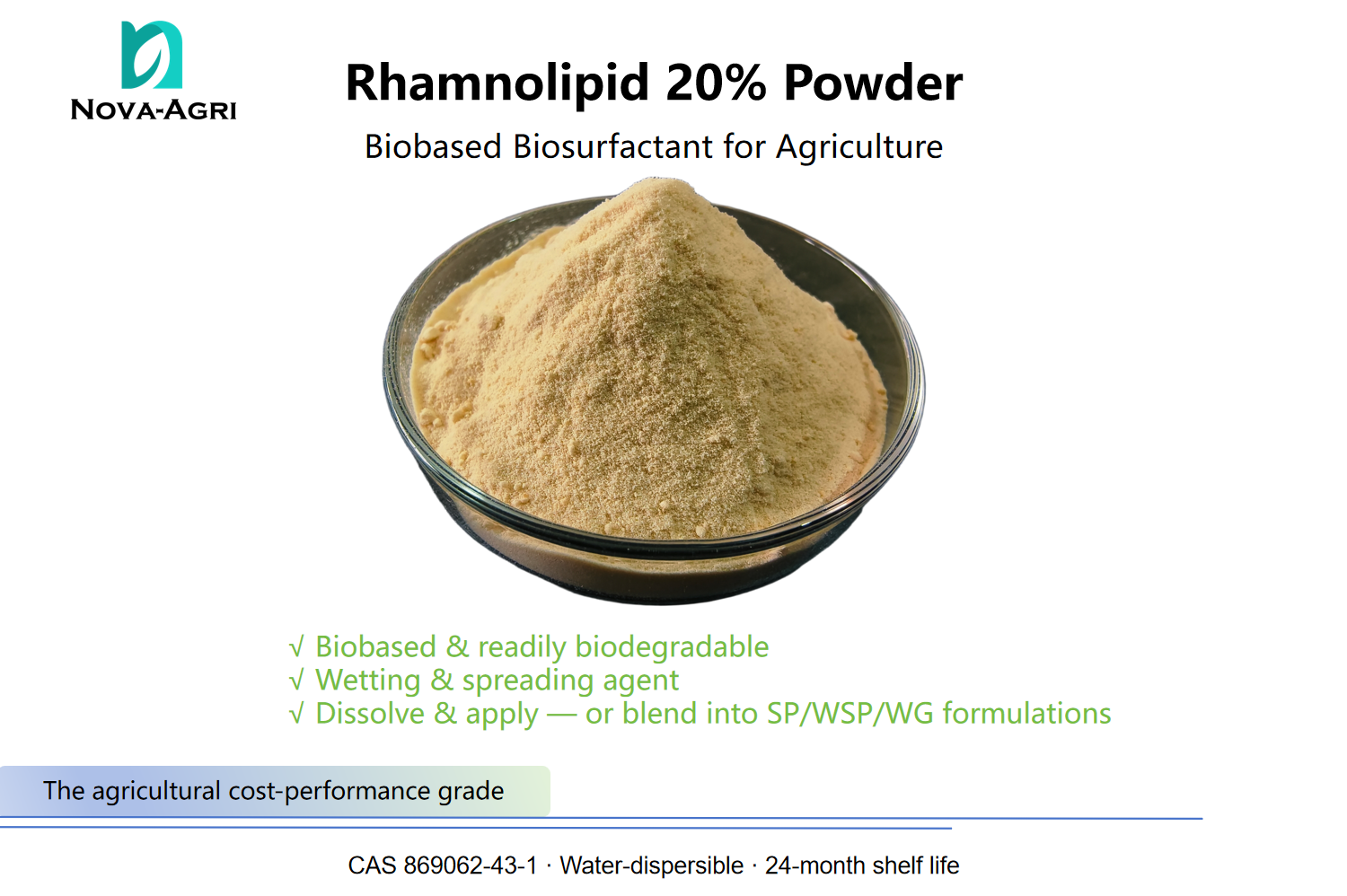
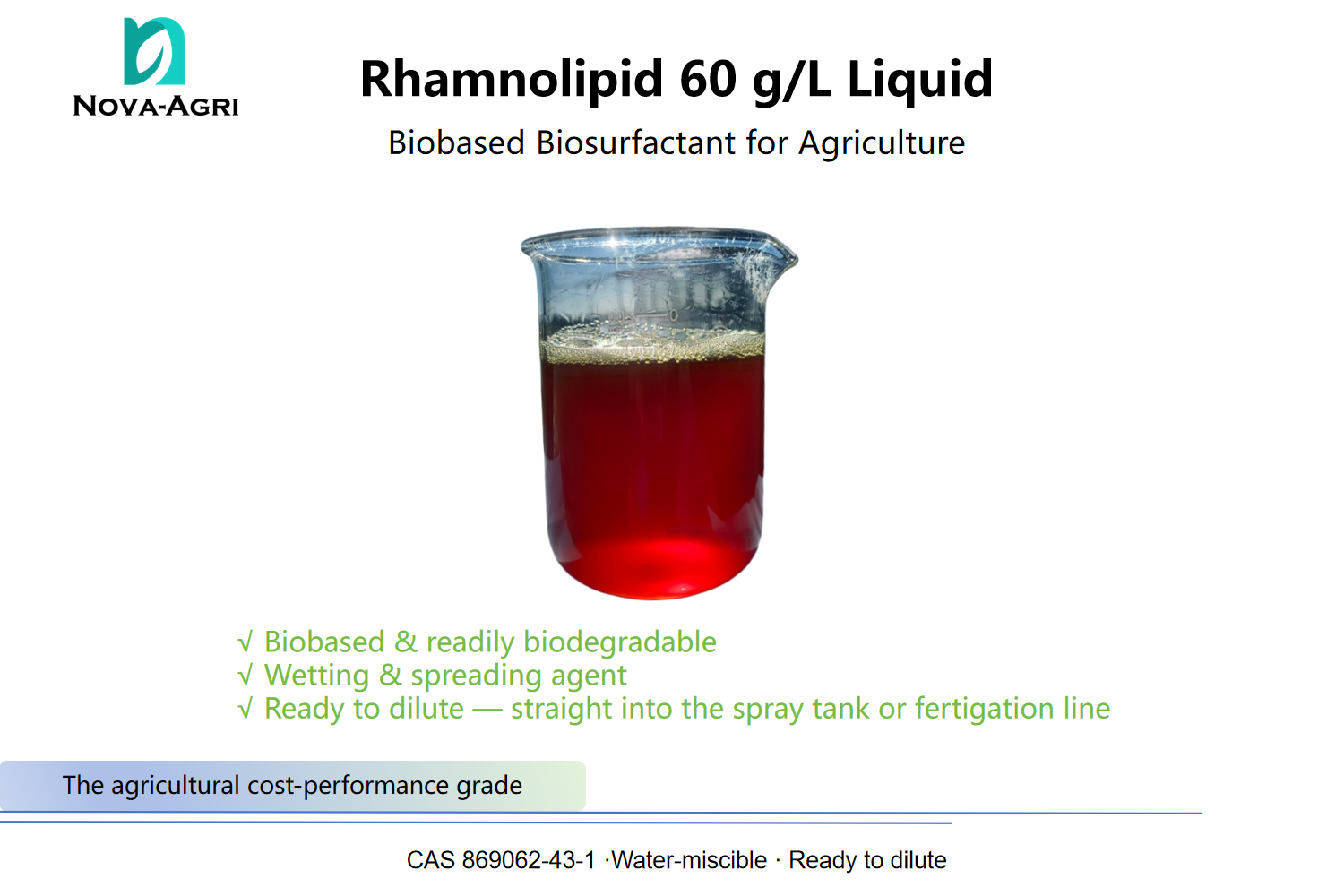
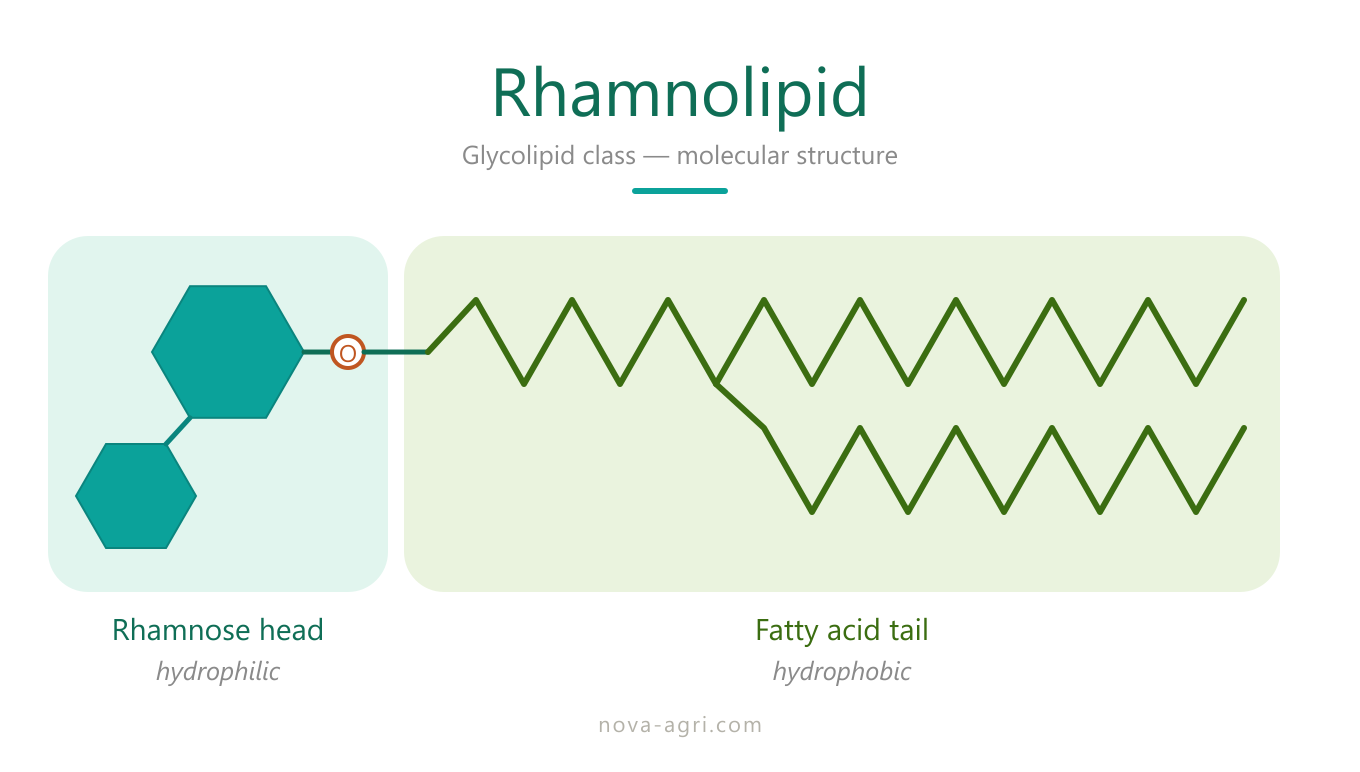
Rhamnolipid is a natural glycolipid biosurfactant produced by microorganisms — most notably Pseudomonas species — through fermentation. Its molecule pairs a hydrophilic sugar head (rhamnose) with hydrophobic fatty-acid tails, so one molecule carries two faces: it lowers the surface tension of water, and it binds both to leaf surfaces and to metal ions. In agriculture, this makes rhamnolipid a genuinely multifunctional ingredient — a wetting and spreading agent, a nutrient carrier, a soil conditioner and a highly compatible partner for biological products. It is non-toxic, readily biodegradable and environmentally friendly, which makes it a natural fit for biostimulant, fertilizer and sustainable crop-protection programs.
Nova-Agri supplies rhamnolipid in two agricultural workhorse forms: a 20% light-yellow powder and a 60 g/L red-brown liquid. (Higher concentrations are available on request; these two are the most cost-effective choices for agricultural use.)
What exactly is rhamnolipid?
Rhamnolipids belong to the glycolipid family of biosurfactants: molecules in which a sugar is linked to a lipid. They are secondary metabolites secreted by bacteria during fermentation under specific culture conditions. Because the rhamnose head is water-loving while the fatty-acid tails are oil-loving, rhamnolipid molecules migrate to water surfaces and interfaces — the basis of every function described below.
Unlike petrochemical surfactants, rhamnolipid is produced by biological fermentation, breaks down readily in the environment and shows low toxicity — a combination increasingly demanded by growers, regulators and export markets.
The numbers that make it work:
3 measured properties explain most of rhamnolipid's field performance:
Critical micelle concentration (CMC) ≈ 33.3 mg/L. This is remarkably low: the molecule self-assembles into micelles at very small concentrations, so it stays active even at low inclusion rates.
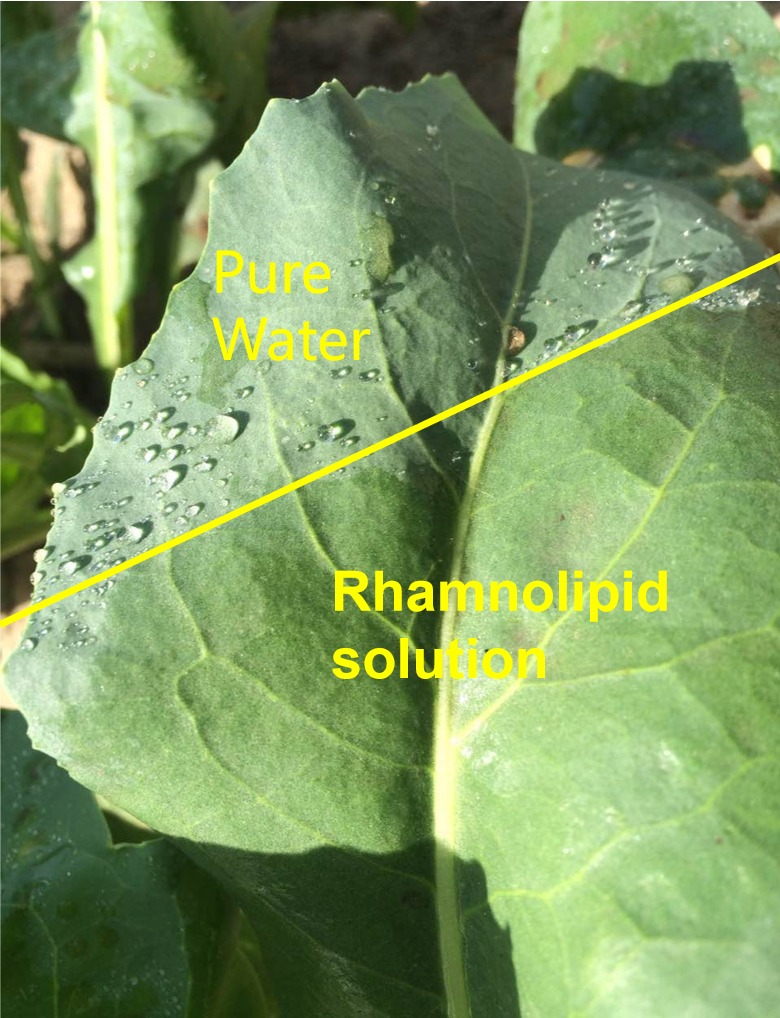
Surface tension reduction to 26 mN/m. Spray droplets spread across the leaf surface instead of beading and rolling off.
100% water solubility, pH 6.0–7.0, formulation compatibility across pH ≥ 4 systems — it behaves predictably in both acidic and neutral tank mixes.
Above its CMC, rhamnolipid forms negatively charged micelles — a detail that matters for both nutrient chelation and soil improvement, as explained below.
Four core functions in agriculture
1. Fertilizer efficiency — better delivery and better uptake
Rhamnolipid improves the wetting and penetration of foliar and root-zone applications. Spray solutions spread into a thin, even film instead of sitting as droplets, and nutrients are carried closer to the sites where plants absorb them. By chelating metal ions, rhamnolipid also helps keep calcium, magnesium and micronutrients such as copper, manganese, silicon and zinc in plant-available form, reducing fixation in the soil solution. healthier root systems — rhamnolipid stimulates root development, enlarging the absorbing surface available to the crop and supporting both yield and quality.
2. Crop-protection support (research-documented)
Published studies report that rhamnolipid inhibits the growth of several plant pathogenic fungi — including the organisms behind Fusarium wilt, apple canker, wheat root rot, pear black spot and watermelon anthracnose — by disrupting pathogen cell-membrane structure and suppressing mycelial growth and spore germination (reported in published scientific literature — laboratory data; not a registered pesticide claim). Rhamnolipid also acts as a plant-immunity elicitor, activating the plant's own defense enzymes and inducing systemic resistance (laboratory research data).
As a tank-mix adjuvant, rhamnolipid improves the wetting, penetration and dispersion of crop-protection products, which can strengthen the performance of conventional spray programs while reducing the chemical load — a documented path to lower fungicide rates in tank mixes (based on laboratory and literature data).
3. Stress tolerance and yield stability
Research and field observations indicate rhamnolipid helps crops tolerate drought, salinity and low-temperature stress, protecting root systems from salt damage and maintaining growth under adverse conditions (literature data). In seed treatment and early-stage applications, it supports germination rate, emergence and seedling vigor — the foundation of a stable final yield.
4. Soil improvement
Through its surface activity, rhamnolipid helps disperse soil particles and promotes the formation of aggregates — improving aeration, water retention and resistance to compaction. Its negatively charged micelles can enhance cation-exchange capacity, helping nutrients reach the root zone. For problem soils, rhamnolipid shows promise in remediating saline soils (leaching harmful ions such as Cl⁻ and Na⁺, moderating pH) and in reducing the bioavailability of heavy-metal contaminants such as cadmium and lead through adsorption and complexation (reported in soil-science literature).
Rhamnolipid vs silicone surfactants: different tools, not substitutes
Both rhamnolipid and organic-silicone (superspreader) surfactants lower surface tension and improve coverage — but they are different tools and should not be treated as interchangeable.
Silicone superspreader | Rhamnolipid | |
Spreading speed | Very fast; extreme coverage at very low rates | Strong, more moderate spreading |
Risk profile | Super-spreading can cause run-off or over-penetration; problematic when actives must stay on the leaf or when live microbials are used | Biodegradable, gentle; generally compatible with biological products |
Origin | Synthetic (petrochemical-based) | Bio-based, fermentation-derived |
Extra functions | None beyond surface activity | Chelation of micronutrients; soil aggregate and CEC benefits |
Best fit | Fast coverage, rain-fastness-critical scenarios | Biological programs, biostimulants, integrated nutrient + soil strategies |
Choose per crop, formulation type and local registration requirements.
Product forms and specifications
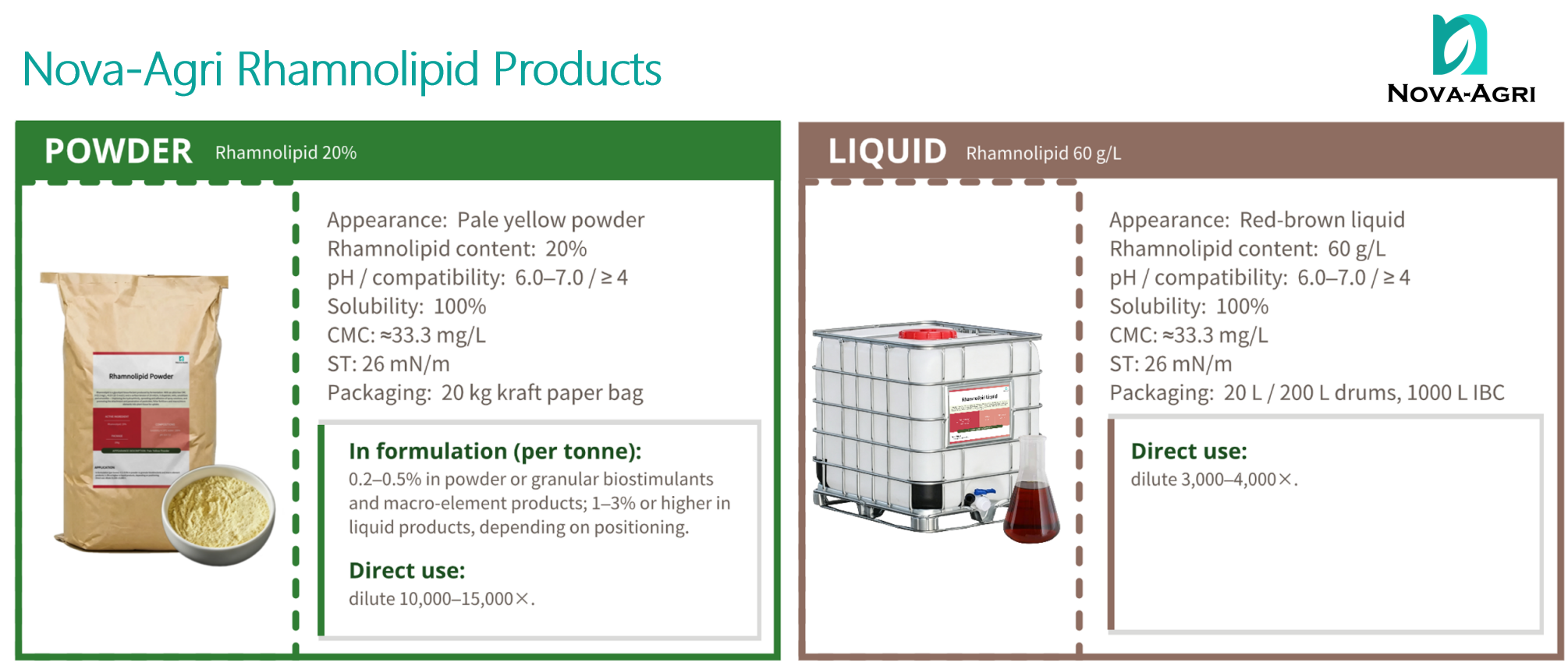
OEM and private-label service is available. SShelf life is 24 months unopened; use within 6 months after opening.. Delivery: approximately 10 working days to Shanghai port.
How agricultural producers use it
As an in-tank adjuvant with foliar fertilizers and crop-protection sprays, to improve wetting, spreading and uptake.
As a seed-treatment and early-stage ingredient, supporting germination and root development.
As a formulation ingredient in biostimulants, foliar feeds, macro-element products and microbial inoculants — dry-blended into powders and granules, or incorporated into liquids.
Formulation inclusion levels and application rates are published on the rhamnolipid product page; contact our team for the version that matches your product positioning.
Frequently asked questions
Is rhamnolipid natural?
Yes — it is a fermentation-derived biological metabolite, readily biodegradable and low in toxicity. Whether an end product qualifies for a specific organic program depends on that program's rules and on the final formulation, so confirm with your certifier.
Is rhamnolipid a pesticide?
No. As supplied, rhamnolipid is a raw material for formulations. Antimicrobial and insecticidal effects have been reported in scientific literature (laboratory data), but rhamnolipid products are not registered pesticides and are not sold as such.
Can it be tank-mixed with fertilizers and pesticides?
In general yes — compatibility spans pH ≥ 4 systems. As with any adjuvant, run a jar test with your specific recipe before large-scale mixing.
Powder or liquid — which should I choose?
If your product is a powder or granule (e.g., a powder biostimulant or macro-element blend), the 20% powder blends homogeneously. If you formulate liquids, the 60 g/L liquid incorporates directly. Both share the same CMC and surface-tension performance.
Why is a low CMC a good thing?
The lower the CMC, the less material is needed before micelles form and the surfactant works at full effectiveness — a direct cost-efficiency argument at formulation scale.
Rhamnolipid brings surfactant performance, nutrient-uptake support and soil benefits in one biodegradable, fermentation-derived ingredient — a combination synthetic surfactants cannot match. If you formulate biostimulants, foliar nutrition or biological crop-protection products, rhamnolipid deserves a place on your shortlist.
Request the COA, spec sheet or a sample → Rhamnolipid 20% Powder · Rhamnolipid 60 g/L Liquid · Contact Nova-Agri
Disclaimer: This article is for general information only. Product performance statements referencing antimicrobial or insecticidal activity are based on published scientific literature and laboratory data; rhamnolipid is not a registered pesticide. Follow the product technical sheet and local regulations for your intended use.
Partner With Us
Interested in the products mentioned?
Contact our export team for availability and partnership opportunities.