
Biosurfactants
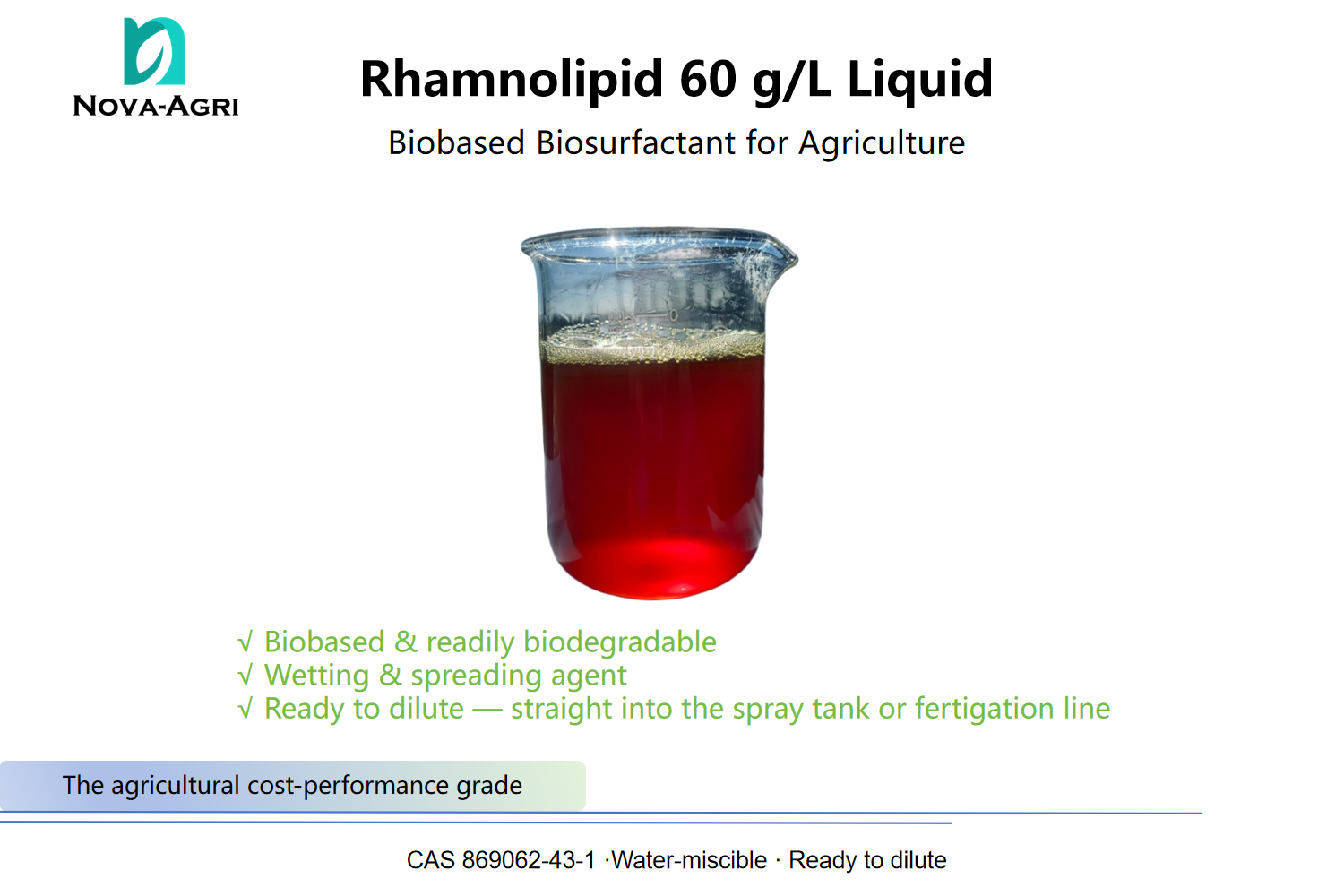
Rhamnolipid 60 g/L Liquid
Rhamnolipid biosurfactant, glycolipid biosurfactant — biobased wetting and spreading agent for formulators and crop programs
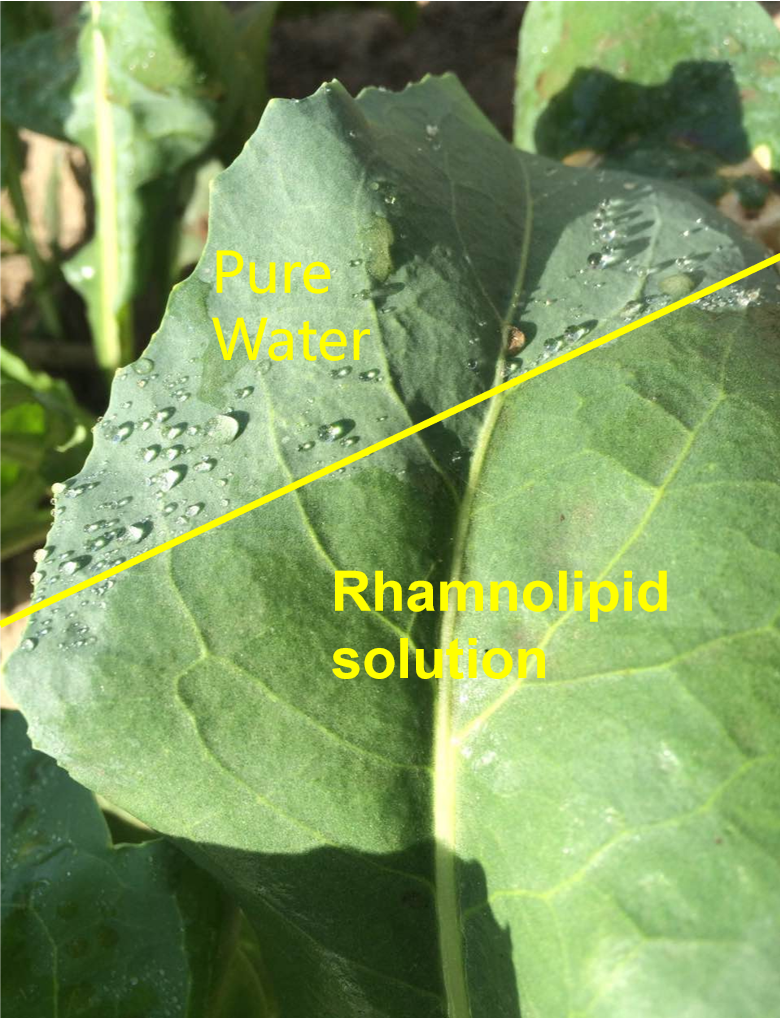
Rhamnolipid 60 g/L Liquid, CAS 869062-43-1, is a glycolipid biosurfactant produced by Pseudomonas fermentation — supplied as the clear, filtered liquid from the finished fermentation (reddish-brown, fully water-miscible). It is ready to dilute: for direct use, dilute at 1:1,500–2,000 in the spray tank, the fertigation line, or for soil wetting. It lowers water surface tension to 26 mN/m (critical micelle concentration ≈ 33.3 mg/L), is biobased and readily biodegradable, and is compatible with most neutral biological formulations. Also used as an input for formulators. Documented in research for seed-soak root-growth programs and antimicrobial activity against selected phytopathogens — check local registration before any biocidal or insecticidal claim. MOQ 1000L; lead time about 10 working days; OEM and batch COA available; shelf life 24 months unopened — use within 6 months after opening.
Technical specifications
- Product Name
- Rhamnolipid(biosurfactant, fermentation-derived)
- Other Names
- Glycolipid biosurfactant
- Appearance
- Reddish-brown clear liquid
- CAS No.
- 869062-43-1
- Active content
- ≥ 60 g/L rhamnolipid
- Base / origin
- Clear, filtered liquid from the finished Pseudomonas fermentation
- pH
- 6-7
- Density (20 °C)
- ~1.00–1.05 g/cm³
- Surface tension
- 26 mN/m
- CMC (critical micelle concentration)
- ≈ 33.3 mg/L
- Interfacial tension vs crude oil
- 0.2728 mN/m
- Solubility
- Freely soluble in water; soluble in chloroform-class organic solvents
- Salt tolerance
- 0–20 g/L
- Temperature tolerance
- −80 °C to 120 °C
- Shelf life
- 24 months unopened (sealed, cool & dark); use within 6 months after opening
- Biodegradability
- Readily biodegradable in soil and water
Package
200L Barrel; IBC Tank
Key benefits
- Strong wetting & spreading power: Lowers water surface tension to 26 mN/m, for faster leaf coverage and more uniform spray deposits at low use rates.
- Works at very low concentration: Critical micelle concentration ≈ 33.3 mg/L; performance begins at minute doses, keeping tank-mix cost per hectare low.
- Emulsifies & disperses hard-to-wet inputs: Interfacial tension against crude oil of 0.2728 mN/m helps stabilize oil-based and nutrient mixes in the tank.
- Biobased & readily biodegradable: Fermentation-derived, low toxicity profile; fits residue-conscious programs and export-driven crop chains.
- Compatible with biological products: Generally compatible with microbial inoculants, biostimulants and biocontrol products in the same tank (test each pair).
- Beyond wetting (documented in research): Seed-coating/soak programs that promote germination and early root growth, and antimicrobial activity against selected phytopathogens (Botrytis, Phytophthora, Fusarium, Rhizoctonia) in research settings. Subject to local registration before any biocidal claim.
- Bottle & sell as your own label: Arrives ready for your packaging line: bottle it, label it, and take it to market directly (OEM packaging and batch COA available). No dust, no metering, no dissolving step.
- Direct tank & fertigation use (winter-safe shipping): Dilute-and-apply straight into the spray tank or fertigation line; stable from −80 °C to 120 °C and across 0–20 g/L salinity, tolerating freeze–thaw during long-haul winter shipping.
Suggested dosage & application
For direct use (dilute in water and apply)
The 60 g/L liquid is water-miscible — dilute at 1:1,500–2,000 and add to the spray tank or fertigation line. Use as a wetting/spreading agent, or for soil-wetting in dry or compacted soils. Keep tank pH near neutral (6–7); avoid strongly acidic or alkaline tank conditions.
*This is a manufacturer-recommended starting range, not a product label — confirm against your local registration and your own field results.
For formulators (blend into your own formulations)
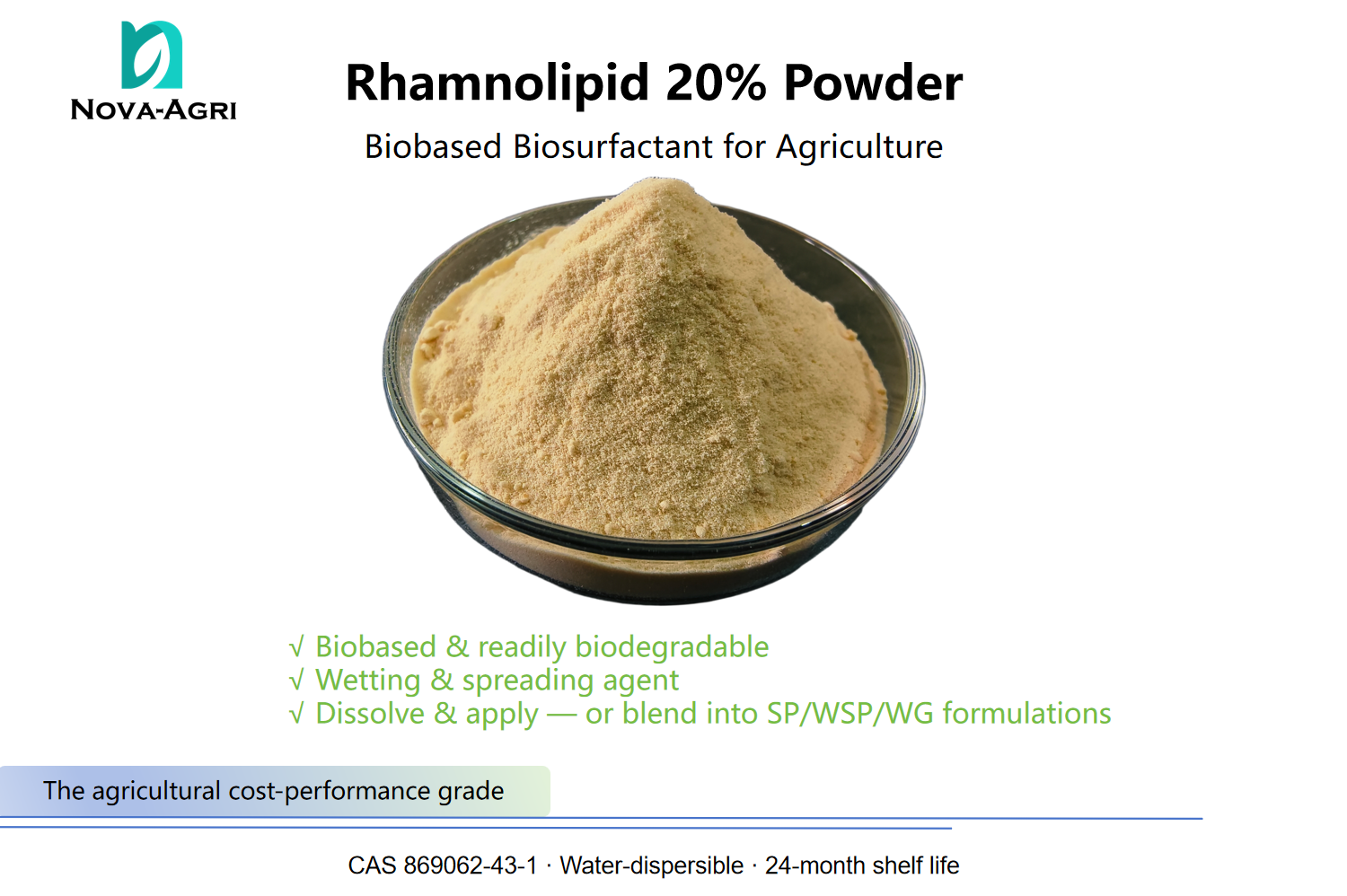
Use as an input for tank-mix adjuvants, foliar nutrition lines, biological product formulations and dedicated soil-wetting products. Pair with macro/micronutrient liquid fertilizers, amino acid or fulvic acid biostimulant lines, or biological actives to build wetting + nutrition + biocontrol programs. Stable from −80 °C to 120 °C and across 0–20 g/L salinity — tolerates winter freeze–thaw shipping and hot-climate warehousing. Every shipment includes COA.
Related articles
Related products
Frequently asked questions
01What is rhamnolipid, and what does it do?
Rhamnolipids are a class of surface-active glycolipid secondary metabolites produced by Pseudomonas microorganisms via fermentation under specific culture conditions. The 60 g/L liquid is supplied as the clear, filtered liquid from the finished fermentation — a reddish-brown, fully water-miscible liquid. It lowers the water-air surface tension from ~72 mN/m to 26 mN/m (critical micelle concentration ≈ 33.3 mg/L) at very low use rates, and the interfacial tension against crude oil to 0.2728 mN/m. In agriculture it is used as a biobased wetting agent, spreading agent, emulsifier and dispersant — and as a soil-wetting agent in dry or compacted soils.
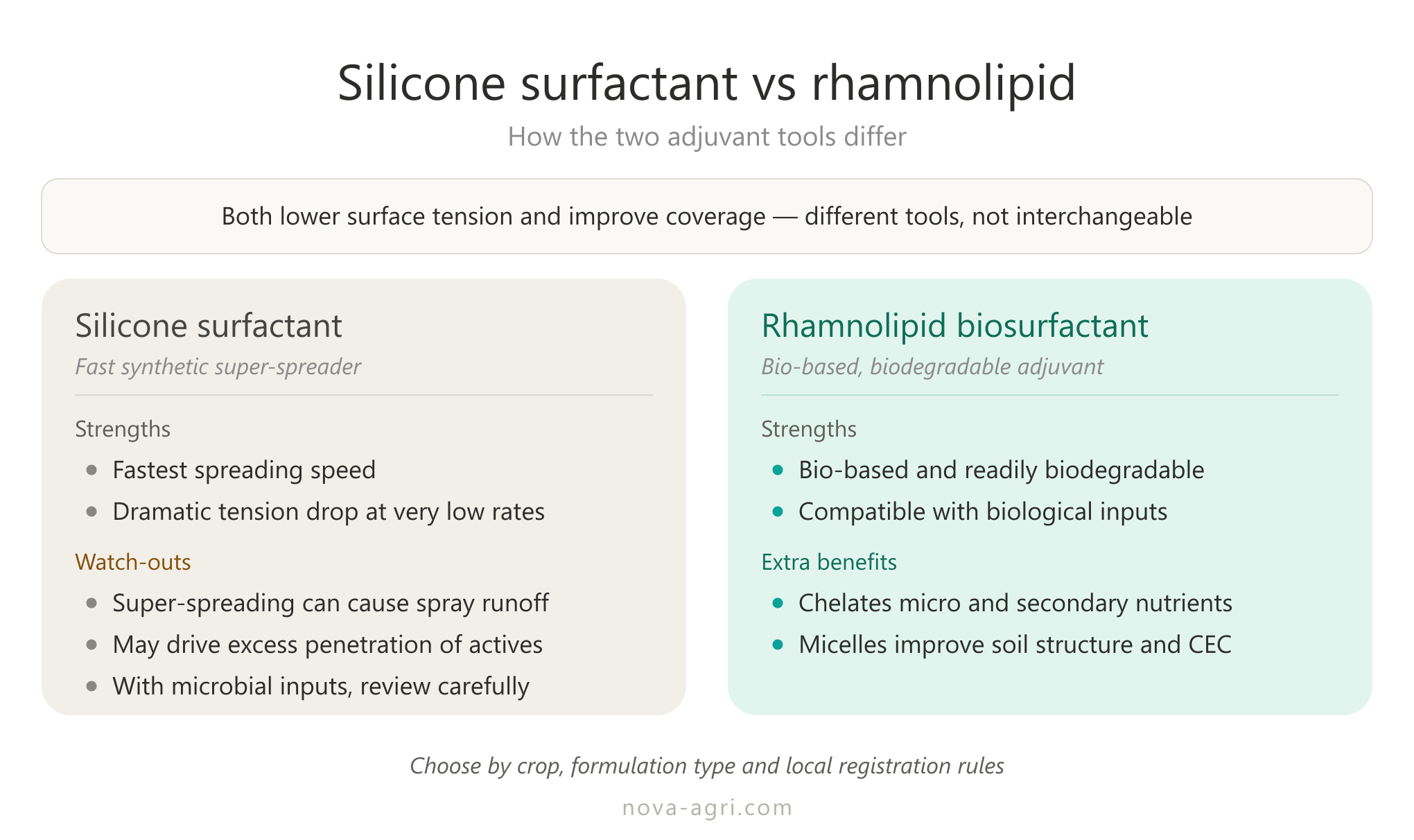
02How does rhamnolipid compare with organosilicone (silicone) surfactants?
Both reduce surface tension and improve coverage; they are different tools, not interchangeable. Organosilicone surfactants spread faster and can reach lower surface tension at very low rates, but their super-spreading behaviour can increase runoff and penetration — which is a concern when the active ingredient needs to remain on the leaf surface or when working with microbial actives. Rhamnolipid is biobased, readily biodegradable and is generally compatible with biological products (microbial inoculants, biopesticides, biostimulants). In addition, rhamnolipids possess characteristics such as the ability to chelate medium and trace elements; furthermore, the negatively charged micelles they form can improve soil aggregate structure and enhance cation exchange capacity. Confirm surfactant choice against the specific crop, formulation and local registration.
03Beyond wetting and spreading, what other functions does rhamnolipid have?
Documented in research: seed-coating and seed-soak programs that promote germination and early root growth; documented antimicrobial activity against selected phytopathogens (e.g. Botrytis, Phytophthora, Fusarium, Rhizoctonia) in vitro and in research settings; and suppression of selected insect pests in published research. These uses are subject to local product registration — confirm against the registration of your target market before any biocidal or insecticidal claim is made on a finished product label.
04How is it applied, and at what use rate?
The 60 g/L liquid is water-miscible and used directly after dilution. For direct use, dilute at 1:1,500–2,000 and apply — as a wetting/spreading agent in the spray tank, in fertigation lines, or for soil-wetting in dry or compacted soils. This is a manufacturer-recommended starting range, not a product label — confirm the final rate against your local registration and your own field results.
05Is rhamnolipid compatible with biological products?
Generally yes — at the typical use rates above it does not impair the viability of common microbial inoculants (e.g. Bacillus, Trichoderma) in tank mixes, but every strain and concentration pair should be tested. The pH window of 6–7 makes rhamnolipid compatible with most neutral biostimulant and biocontrol formulations. Avoid strong acid or alkali (>pH 10) tank conditions.
06Is it ready to use, or does it need to be formulated first?
It is ready to dilute and use — the 60 g/L liquid is water-miscible and can go straight into the spray tank or a fertigation line. It is equally suitable as an input for formulators: blend it into tank-mix adjuvants, foliar nutrition lines, biological product formulations or dedicated soil-wetting products. Pesticidal or biocidal label claims on a finished product remain the responsibility of the registrant in your country. Every shipment includes a batch COA.
07What is the regulatory status of rhamnolipid?
Rhamnolipid is recognized internationally as a low-toxicity, biodegradable biosurfactant. In the US, rhamnolipid is registered with the EPA as a biochemical pesticide active ingredient (PC Code 110029). We support that process with COA, TDS, MSDS, etc and impurity profile on every lot.
08What is the MOQ, lead time and shelf life?
MOQ is 1000L. Typical lead time is about 10 working days to Shanghai port; OEM packaging and batch COA are available. Shelf life is 24 months unopened; use within 6 months after opening.
09Why 60 g/L — and are higher-concentration liquids available?
For agricultural programs, 60 g/L is the concentration range where field performance and cost balance best. At typical agricultural dilution rates, the working spray solution reaches the same measured surface tension (~26 mN/m) whether you start from the 60 g/L liquid or a higher-concentration grade — the difference is carried mainly in price, not in spreading performance in the tank. (The measured performance is identical for both delivery forms: surface tension 26 mN/m, critical micelle concentration ≈ 33.3 mg/L.) Higher-concentration liquid grades are available on request for industrial and specialty applications, where pricing rises steeply with concentration. For wetting, spreading, soil-wetting and tank-mix programs, the 60 g/L liquid is the cost-effective choice; if your application genuinely requires a higher assay, contact us for a quotation.
Partner With Us
Need samples, COA, or formulation support?
Contact our export team for pricing, regulatory documentation, and tailored supply planning for Rhamnolipid 60 g/L Liquid.
Start an inquiry