
Jul 23, 2026
How Glycine Betaine (Anhydrous) Works as a Plant Osmoprotectant: Heat, Drought & Fruit Cracking Prevention
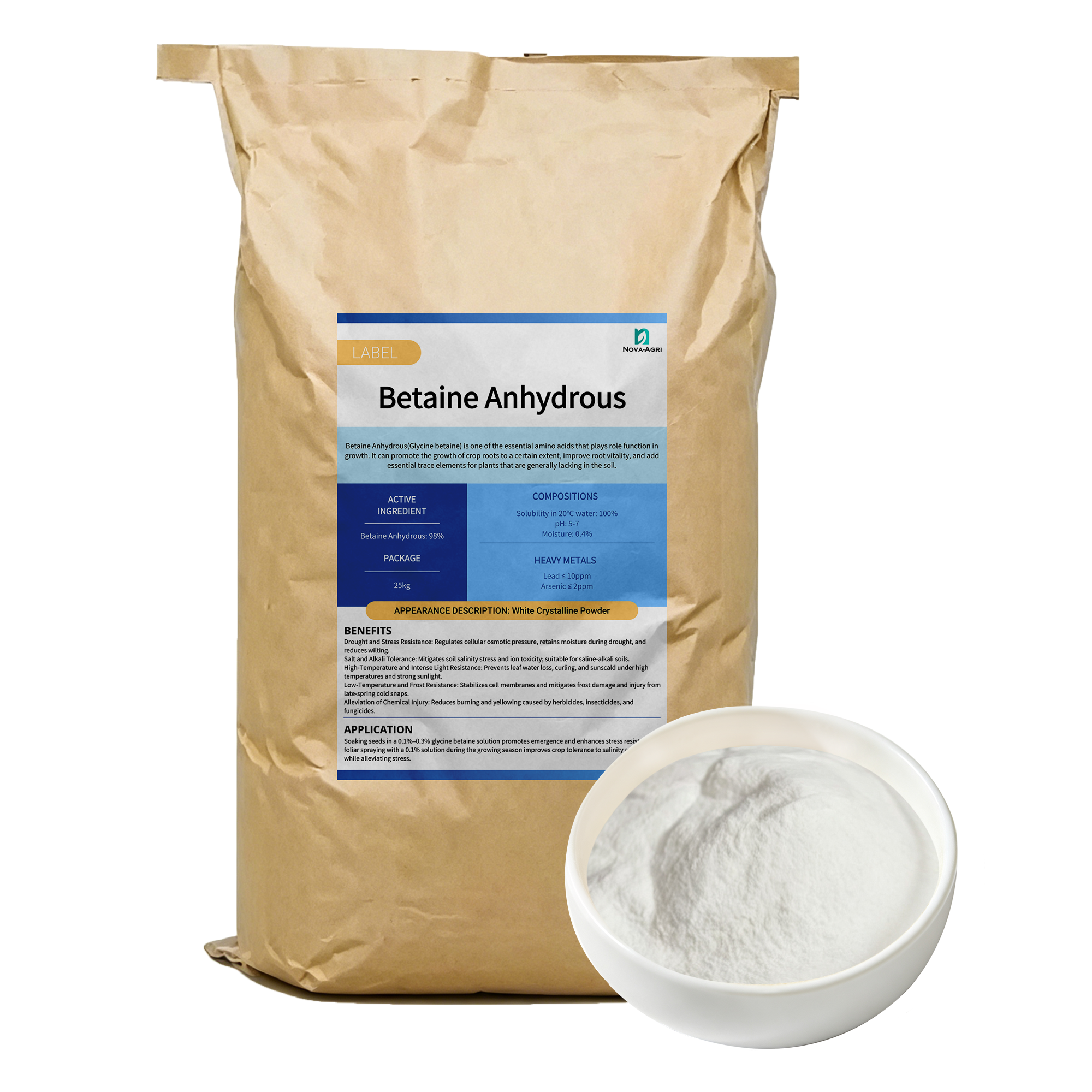
Introduction to Glycine Betaine (Anhydrous) 98% Powder
Glycine Betaine (Anhydrous) 98% is a high-purity, naturally occurring quaternary ammonium compound that functions as an ultra-efficient plant osmoprotectant and biostimulant. Naturally synthesized in halophytic plants, Glycine Betaine regulates cellular osmotic balance and maintains membrane stability during acute environmental stress. Featuring a guaranteed purity of 98%, this 100% water-soluble crystalline powder provides fertilizer manufacturers, formulators, and commercial growers with a targeted solution to prevent yield loss caused by severe heat, drought, soil salinity, and fruit cracking.
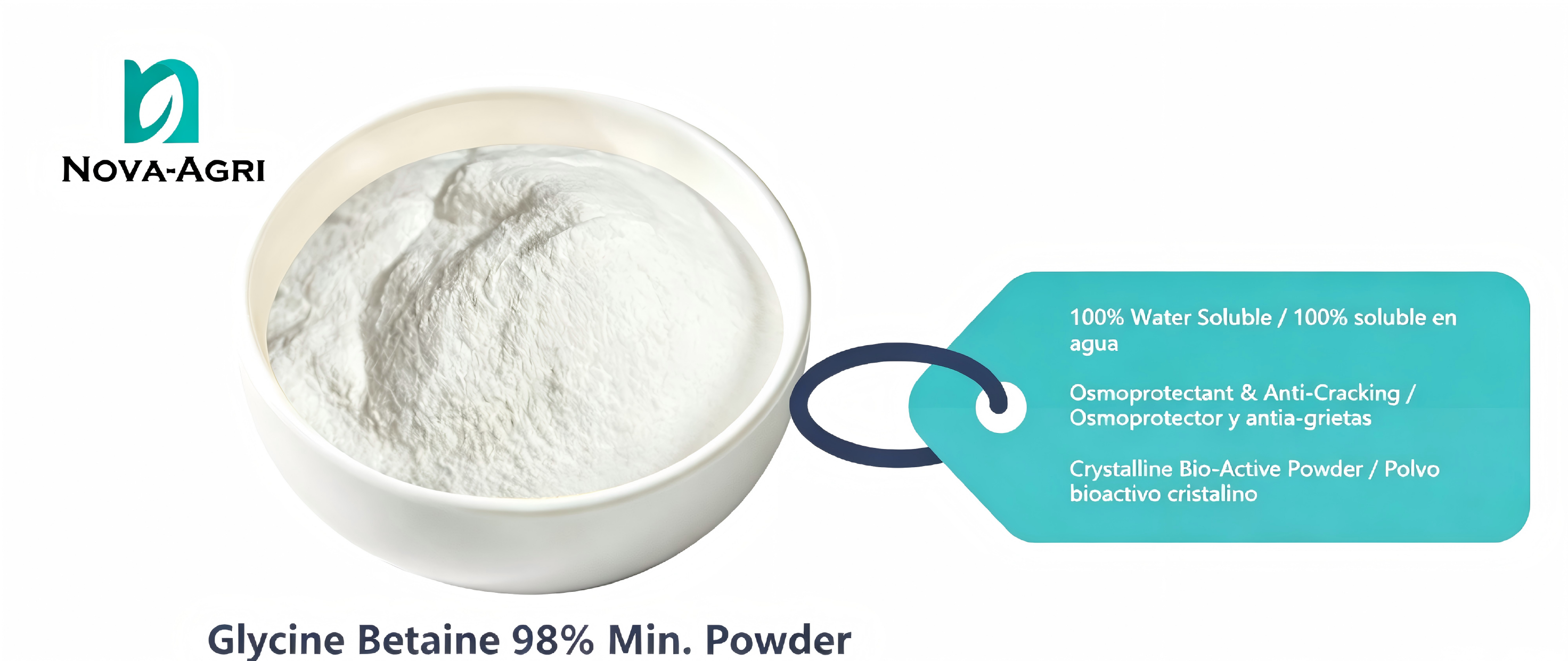
Core Benefits & Key Physiological Function
Glycine Betaine (Anhydrous) 98% protects plant cellular integrity and preserves photosynthetic machinery under abiotic stress. When applied via foliar spray, drip irrigation, or seed treatment, it rapidly accumulates in plant cytoplasm, adjusting osmotic potential without interfering with normal enzyme activity.
- Cellular Osmoregulation: Maintains cell turgor and water retention during severe drought, extreme heat, and high soil salinity.
- Sunburn & Fruit Cracking Reduction: Preserves elasticity in fruit skins (such as cherries, grapes, avocados, and citrus), dramatically reducing fruit splitting and solar heat damage.
- Photosynthesis Protection: Stabilizes the Structure of Photosystem II (PSII) and Rubisco enzymes, maintaining carbon assimilation even under thermal stress.
- Enzyme & Membrane Shield: Prevents protein denaturation and lowers reactive oxygen species (ROS) accumulation during rapid temperature fluctuations.
Target Application Scenarios & Regional Focus
Glycine Betaine (Anhydrous) 98% is uniquely suited for high-value horticultural export crops and broadacre farms facing severe climate stress.
- Extreme Heat & Heatwave Defense: Applied 24–48 hours before anticipated heat events to maintain leaf turgor and prevent flower abortion or fruit drop.
- Fruit Quality & Cracking Control: Essential for cherries, table grapes, blueberries, avocados, and citrus prior to harvest to prevent epidermal cracking caused by rain after drought.
- Saline Soil & Brackish Water Mitigation: Foliar application enables crops to thrive in high-EC soils and irrigation water by preventing toxic sodium (Na+) ion stress.
- Post-Transplant & Early Root Establishment: Reduces transplant shock in vegetable seedlings and promotes rapid root expansion.
Recommended Dosage & Formulation Guidelines
Because Glycine Betaine (Anhydrous) 98% is an ultra-pure, crystalline active material, precise low-dosage inclusion rates yield high biological efficiency across direct field applications and complex industrial formulations.
1. For Formulators & Fertilizer Manufacturers (Industrial Blending)
Glycine Betaine (Anhydrous) 98% acts as an exceptional osmoprotective booster when blended into liquid or dry fertilizer lines. Recommended addition rates per metric ton (1,000 kg or 1,000 L) of finished product are:
Enriching Liquid Biostimulants & Seaweed Extracts:
- Addition Rate: Add 5.0 kg – 15.0 kg of Glycine Betaine 98% per 1,000 Liters of concentrated liquid (0.5% – 1.5% w/v).
- Formulator Advantage: Enhances standard seaweed or amino acid liquids with a distinct "Heatwave & Drought Rescue" market claim.
Enriching Water-Soluble NPK & Calcium Powders:
- Addition Rate: Add 10.0 kg – 30.0 kg of Glycine Betaine per 1,000 kg of finished dry mix (1.0% – 3.0% w/w).
- Formulator Advantage: Synergizes with Calcium and Boron formulations to maximize cell wall strength and elasticity against fruit cracking.
Foliar Anti-Cracking & Sunburn Concentrates:
- Addition Rate: Add 20.0 kg – 50.0 kg of Glycine Betaine per 1,000 Liters (2.0% – 5.0% w/v).
- Formulator Advantage: Designed for targeted fruit-protection sprays applied at 1:500 to 1:1,000 dilution in fruit orchards.
Seed Coating & Treatment Liquids:
- Addition Rate: Add 200 g – 500 g of Glycine Betaine per 100 Liters of seed slurry matrix.
2. For End-Users & Direct Field Application
- Foliar Spray: Apply 1.0–2.0 kg/ha (diluted 1:500 to 1:1,000 in water, approx. 100–200 g per 100 L water). Apply every 14 days during heatwaves, fruit expansion, or pre-harvest windows.
- Drip Irrigation / Fertigation: Apply 2.0–5.0 kg/ha per application during critical root initiation or severe drought stress.
- Seed Priming / Treatment: Use 1.0–2.0 g/kg of seeds to boost germination rate under saline or cold soil conditions.
Synergistic Tank-Mix Recommendations
Glycine Betaine (Anhydrous) 98% features high physical stability and excellent water solubility, making it easy to tank-mix with essential nutrients and biostimulants.

Frequently Asked Questions
Q1: What is Glycine Betaine 98% powder, and how does it act as an osmoprotectant?
Answer: Glycine Betaine 98% is a high-purity, naturally occurring osmoprotectant biostimulant. When absorbed by plants, it accumulates in cells to balance osmotic pressure during drought, heat, or salinity stress. It preserves cellular water without disrupting enzyme function, allowing crops to maintain normal growth under stress.
Q2: How does Glycine Betaine prevent fruit cracking and sunburn in fruit orchards?
Answer: Fruit cracking occurs when rapid water uptake creates internal pressure that exceeds skin elasticity. Glycine Betaine regulates cell turgor and membrane flexibility in fruit epidermal tissues. When combined with calcium, it stabilizes cell structures, dramatically reducing splitting in cherries, grapes, citrus, and avocados.
Q3: What is the difference between Glycine Betaine and traditional amino acid biostimulants?
Answer: Traditional amino acid hydrolysates provide a mixture of building blocks primarily used for protein synthesis and general nutrition. In contrast, Glycine Betaine (Anhydrous) 98% acts specifically as an osmoprotectant and cellular shield, accumulating directly in cell sap to maintain hydration during severe abiotic stress.
Q4: How does Glycine Betaine protect crops during heatwaves and drought?
Answer: During extreme heat and drought, plants normally close stomata to prevent water loss, which halts photosynthesis. Glycine Betaine stabilizes photosynthetic enzymes and cellular turgor, enabling the plant to continue carbon assimilation and energy production even under high temperatures.
Q5: Is Glycine Betaine 98% powder completely soluble in water for fertigation and drone spraying?
Answer: Yes, Glycine Betaine 98% is 100% water-soluble crystalline powder. It dissolves instantly and completely into a clear liquid without leaving insoluble residues, making it fully compatible with precision drip systems, micro-sprinklers, and agricultural drone nozzles.
Q6: Can Glycine Betaine 98% be tank-mixed with calcium and calcium nitrate fertilizers?
Answer: Yes, Glycine Betaine has excellent chemical stability and is fully compatible with calcium nitrate, chelated calcium, boron, and NPK fertilizers. Tank-mixing Glycine Betaine with calcium is a gold-standard agronomic practice for fruit skin strength and heat defense.
Q7: When is the best time to apply Glycine Betaine to crops?
Answer: For heat and drought protection, apply 24 to 48 hours prior to expected weather stress. For fruit cracking prevention, apply during early fruit expansion and continue applications every 10–14 days up until pre-harvest windows.
Q8: What is the recommended application rate of Glycine Betaine 98% per hectare?
Answer: For general foliar spraying, the recommended dosage is 1.0 to 2.0 kg per hectare (diluted 1:500 to 1:1,000 in water). For drip irrigation and fertigation, apply 2.0 to 5.0 kg per hectare depending on crop size and stress severity.
Q9: Does Glycine Betaine help crops grow in saline-alkaline soils?
Answer: Yes. High soil salinity causes osmotic stress and sodium (Na+) toxicity in root cells. Glycine Betaine restores osmotic balance within root tissues, allowing plants to continue absorbing water and essential nutrients (K+, Ca2+) even in high-EC saline soils.
Q10: What visible physiological results can growers expect after applying Glycine Btaine?
Answer: Growers typically observe reduced leaf wilting during mid-day heat, fewer split or cracked fruits after rain, darker green foliage during dry spells, improved fruit uniformity, and overall higher marketable yield.
Partner With Us
Interested in the products mentioned?
Contact our export team for availability and partnership opportunities.